
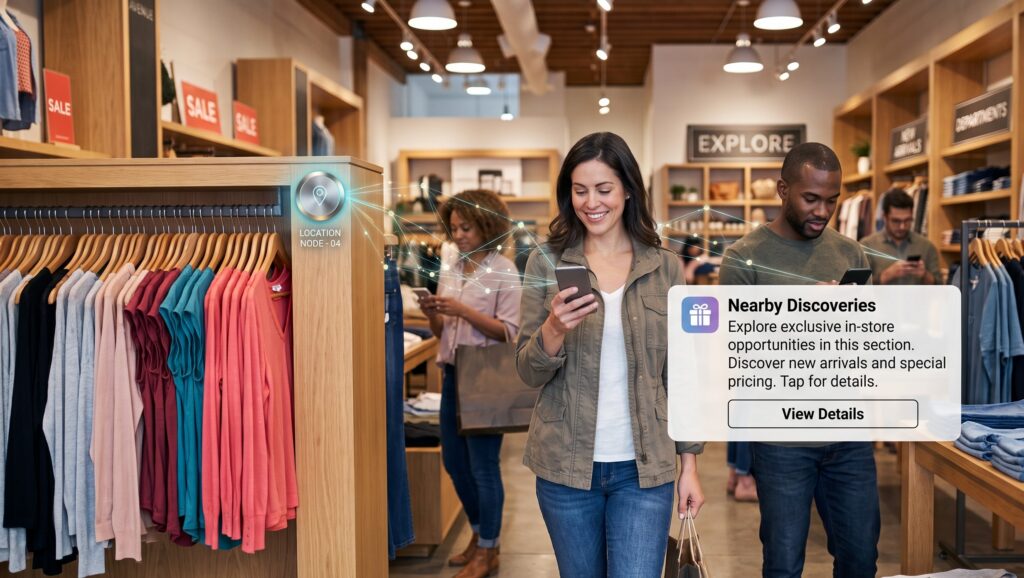
Have you ever walked past a specific department in a store and immediately received a notification about a sale happening right there? That is proximity marketing in action. It is a powerful way for businesses to connect with customers at the exact moment they are ready to engage. Let’s look at how this technology works and why it is an essential upgrade for your physical location.
The Technology Behind the Connection
Proximity marketing relies on tools you already know. The most common are WiFi networks and Bluetooth devices like iBeacons.
An iBeacon is simply a small wireless transmitter. You can place these discreetly around your store. They constantly send out low energy Bluetooth signals. When a customer walks by with a smartphone, their device detects that signal.
Your existing WiFi network can work in a similar way. Store routers can sense when a smartphone is nearby searching for a connection. This interaction creates a digital handshake between your physical space and the customer. The best part is that you do not need to be an IT professional to use it. These systems run quietly in the background and do the heavy lifting for you.
Moving Past Basic Door Counters
For years, businesses relied on simple door sensors to measure store traffic. A beam of light across the entrance would count how many people walked inside. This provided a basic headcount but left out the most important details. A door counter cannot tell you where a customer went, what they looked at, or how long they stayed.
Advanced foot traffic mapping completely changes this dynamic. By using the signals from WiFi and Bluetooth, you can trace the actual paths people take through your venue. You can instantly see which aisles draw the largest crowds and which promotional displays are being ignored. This information allows you to redesign your floor plan intelligently. You can confidently place your highest margin products in proven high traffic zones.
Tailoring the Shopping Experience
Knowing a customer has entered your building is a great start. Knowing their exact store presence in a specific aisle is where you drive real revenue.
When you understand exactly where a shopper is standing, you can tailor their experience in real time. If your system sees a customer spending several minutes in the outerwear section, it can automatically trigger a push notification. That notification could offer a temporary discount on winter coats or suggest matching accessories.
This strategy works because it feels personal and relevant. You are not spamming your audience with generic emails. You are providing them with valuable offers precisely when they are looking at the product. This builds customer loyalty and dramatically increases your chances of closing a sale.
Building a Smarter Physical Space
Proximity marketing bridges the gap between digital convenience and real world shopping. It turns invisible signals into concrete business data. By moving beyond basic door counters and embracing location technology, you can understand your audience on a much deeper level. This ultimately leads to smarter daily operations, better customer experiences, and stronger overall sales.